Grand Opera House: Downtown Los Angeles' Lost Theater Pioneer
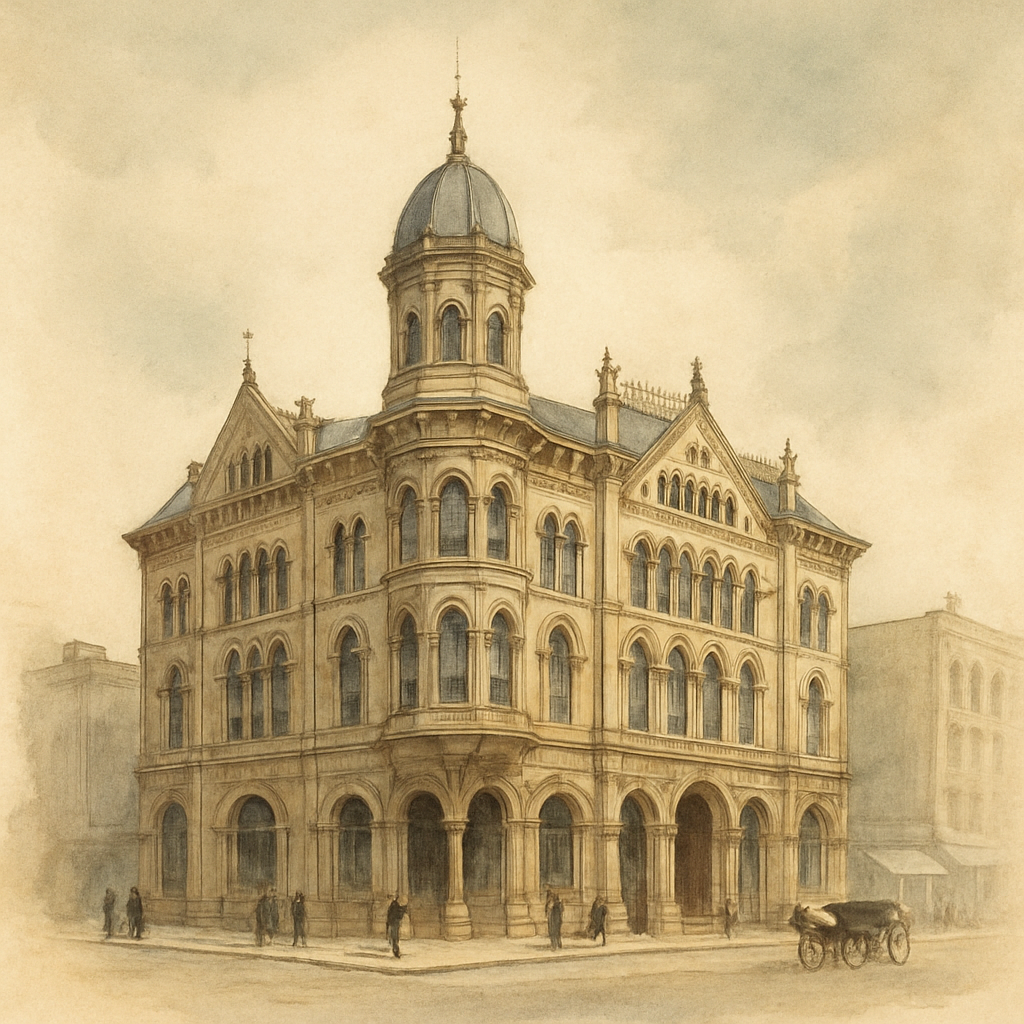
On a street corner in downtown Los Angeles, a grand theater once stood as a gateway to modern entertainment. The Grand Opera House—also known as Child's Opera House, the Orpheum Theatre, and Teatro Mexico—was more than a performance venue; it was the birthplace of two revolutions in Los Angeles culture.
A Theater of Many Names
The building at the intersection of Broadway and 3rd Street carried several identities throughout its lifetime, each name reflecting the era and audience it served. Originally established as Child's Opera House, it became the Grand Opera House and later the Orpheum Theatre when it joined the influential Orpheum Circuit. By the early 20th century, as Los Angeles' demographics shifted, it operated as Clune's Grand and eventually Teatro Mexico, serving the city's Spanish-speaking community. Each incarnation represented the theater's adaptability to the changing neighborhoods around it.
First Home of the Orpheum Circuit
The Orpheum Circuit was a vaudeville powerhouse that stretched across North America, and the Grand Opera House was its Los Angeles anchor. This distinction made downtown LA a serious contender in the entertainment world, not just a regional backwater. Performers who appeared on the Orpheum Circuit stages were working at the highest levels of live theater, and Los Angeles audiences had direct access to this caliber of talent. The theater's role in the circuit elevated the city's cultural standing and drew audiences from across Southern California.
Edison's Moving Pictures Find Their Stage
Perhaps the Grand Opera House's most significant contribution to Los Angeles history was its adoption of Thomas Edison's motion picture technology. As the first theater in Los Angeles to exhibit these early films, it stood at the frontier of what would become the film industry. In the 1890s, moving pictures were novelties—short, flickering glimpses of the world captured on celluloid. That they premiered in a legitimate opera house, rather than in a penny arcade, signaled that this new medium was worth taking seriously. The convergence of live performance and recorded image at the Grand Opera House foreshadowed the eventual dominance of cinema in Los Angeles culture.
A Downtown Landmark Lost
Like many early 20th-century theaters, the Grand Opera House eventually closed as tastes changed and newer venues opened. The building itself no longer stands, but its legacy persists in the history of downtown Los Angeles—a reminder that the city's entertainment heritage runs deeper than the studios and soundstages of Hollywood. The Grand Opera House was where Angelenos first gathered to see the future unfold on stage.
Source: Wikipedia — CC BY-SA 4.0
- downtown-los-angeles
- theater-history
- orpheum-circuit
- early-cinema
- lost-landmarks
- la-culture