Fillmore West: San Francisco's Lost Temple of Rock and Roll
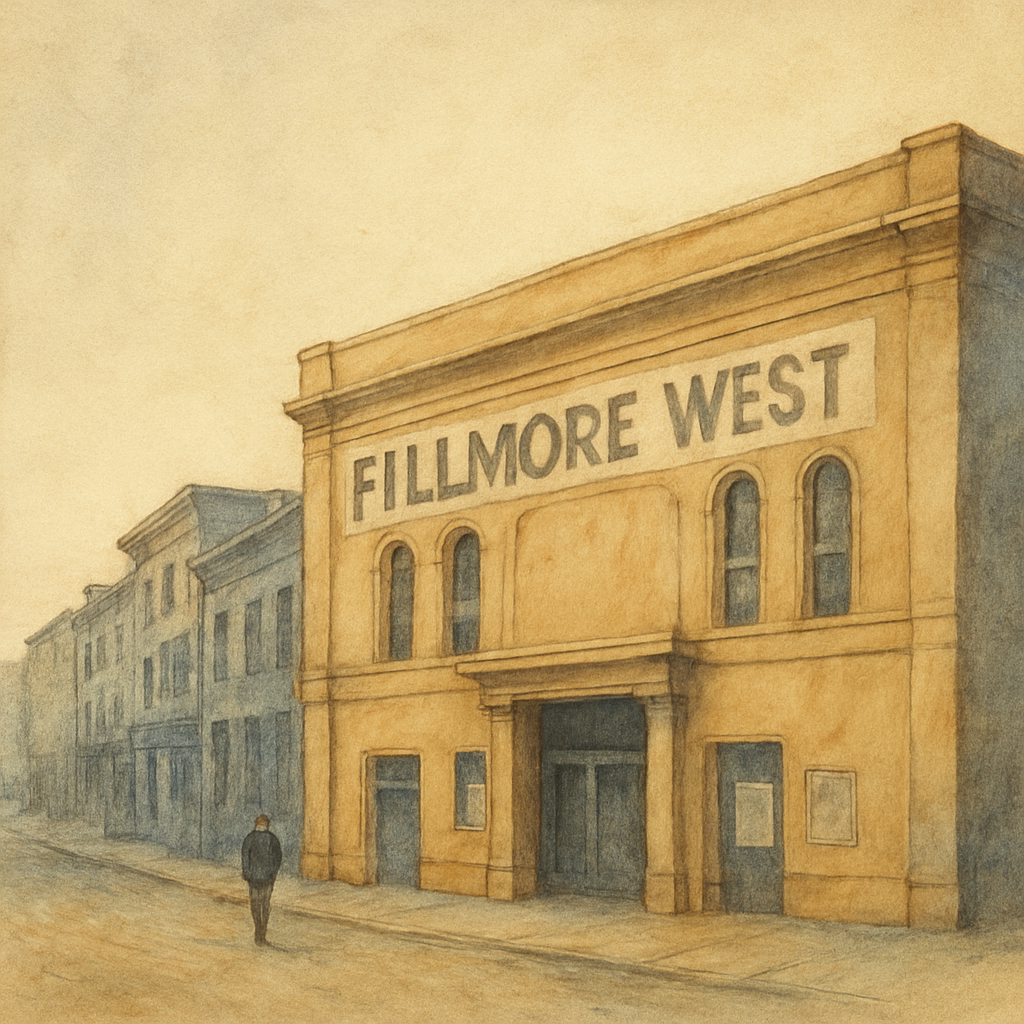
In 1968, Bill Graham opened Fillmore West at Market and Van Ness, turning a former dance hall into ground zero for the San Francisco Sound. For just three years, it hosted every major rock band of the psychedelic age before closing its doors forever.
On the corner of Market Street and South Van Ness Avenue, in the shadow of San Francisco's Civic Center, stood a building that became synonymous with the birth of modern rock music. Fillmore West was never the largest venue, never the most ornate—but from 1968 to 1971, it was the place where the counterculture came to hear itself amplified.
Bill Graham, a promoter who had already built a reputation at The Fillmore (his original venue on Fillmore and Geary, operating from 1966 to 1968), opened Fillmore West with a clear vision: create an intimate theater where major acts could perform multiple nights in a row, building community rather than chasing crowd size. The venue held around 2,000 people, small enough to feel electric, large enough to host the biggest names in rock.
The Sound That Defined a Generation
The Grateful Dead, Jefferson Airplane, Santana, Led Zeppelin, Jimi Hendrix, and the Allman Brothers Band all played Fillmore West. Graham famously paid artists what they asked for and let them play as long as they wanted. Friday and Saturday night shows became events—ticket stubs became collectible art, with posters by Wes Wilson and Neon Rose that defined the psychedelic visual aesthetic. The venue became the unofficial headquarters of San Francisco's music scene during its most explosive period.
A Three-Year Flash
What made Fillmore West remarkable was not its longevity but its intensity. Graham's model—short, concentrated runs of the same band over multiple nights—created a laboratory for experimentation. The house band, Santana, became superstars partly because of their residencies there. The Dead used it as their testing ground for new material. By the early 1970s, as the counterculture fragmented and concert promotion moved toward stadium tours, Fillmore West's moment passed. Graham closed the doors on July 4, 1971, marking the symbolic end of an era.
What Remains
The building still stands at 1805 Market Street, but it is no longer a concert hall. In June 2018, the top two floors were renovated for other uses. Yet the myth of Fillmore West lives on in the bootleg recordings, the poster collections, and the stories of anyone who witnessed it. For three years, San Francisco had a place where music and community were inseparable.
Do you have a memory of a show there, or have you heard the stories from someone who was there? What band would you have wanted to see in that room?
- san-francisco-music
- fillmore-west
- bill-graham
- rock-history
- civic-center
- lost-venues