The subway station New York closed a century ago
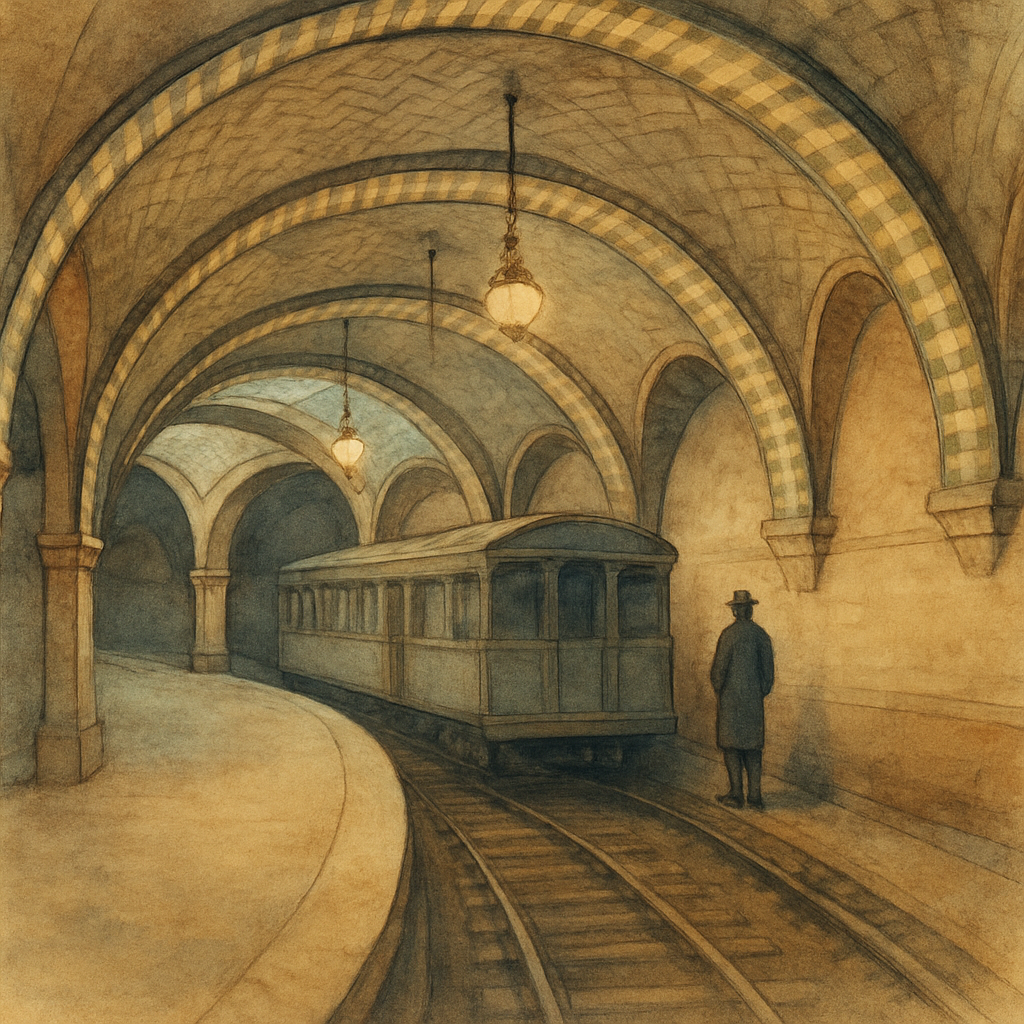
In 1904, the IRT opened its inaugural line with City Hall as the southern terminus—a gleaming station that embodied the city's faith in rapid transit. Decades later, it fell silent, sealed beneath the streets as a phantom of early subway ambition.
On October 27, 1904, the Interborough Rapid Transit Company opened the city's first subway line, and City Hall station was its grand southern anchor. Passengers arriving at the platform found themselves in a station unlike any other: a curved tunnel beneath City Hall Park, next to the seat of municipal power, designed as a terminal loop that would turn trains around with elegant efficiency.
The station served commuters and sightseers for four decades. But by the 1940s, the geometry that once seemed innovative had become a liability. The tight curve and loop configuration slowed operations. Trains backed up. The IRT needed speed, not ceremony.
The End of a Terminal
On December 25, 1945—Christmas Day—City Hall station closed to the public. Trains on the Lexington Avenue Line no longer descended into the loop. Instead, they continued north, making the station's elegant platform redundant. The city sealed the tunnels, and the station became what transit workers call a "ghost station"—a real place, accessible only to maintainers and official personnel, frozen in mid-century time.
What Remains
Today, City Hall station sits 63 feet beneath City Hall Park, a sealed time capsule of early-twentieth-century design. Its rounded platform and art-deco tilework have never been destroyed; they endure in darkness, occasionally glimpsed by workers or documented in transit-history photographs. The station has become a symbol of the choices cities make—progress versus preservation, efficiency versus elegance.
Manhattan's Civic Center neighborhood moved forward, but City Hall station remained, a reminder that the first subway line was itself a monument to an earlier vision of the city.
- new-york-city-subway
- manhattan-history
- ghost-stations
- city-hall
- transit-history
- closed-infrastructure