Tweed Courthouse: Manhattan's Monument to Gilded Age Corruption
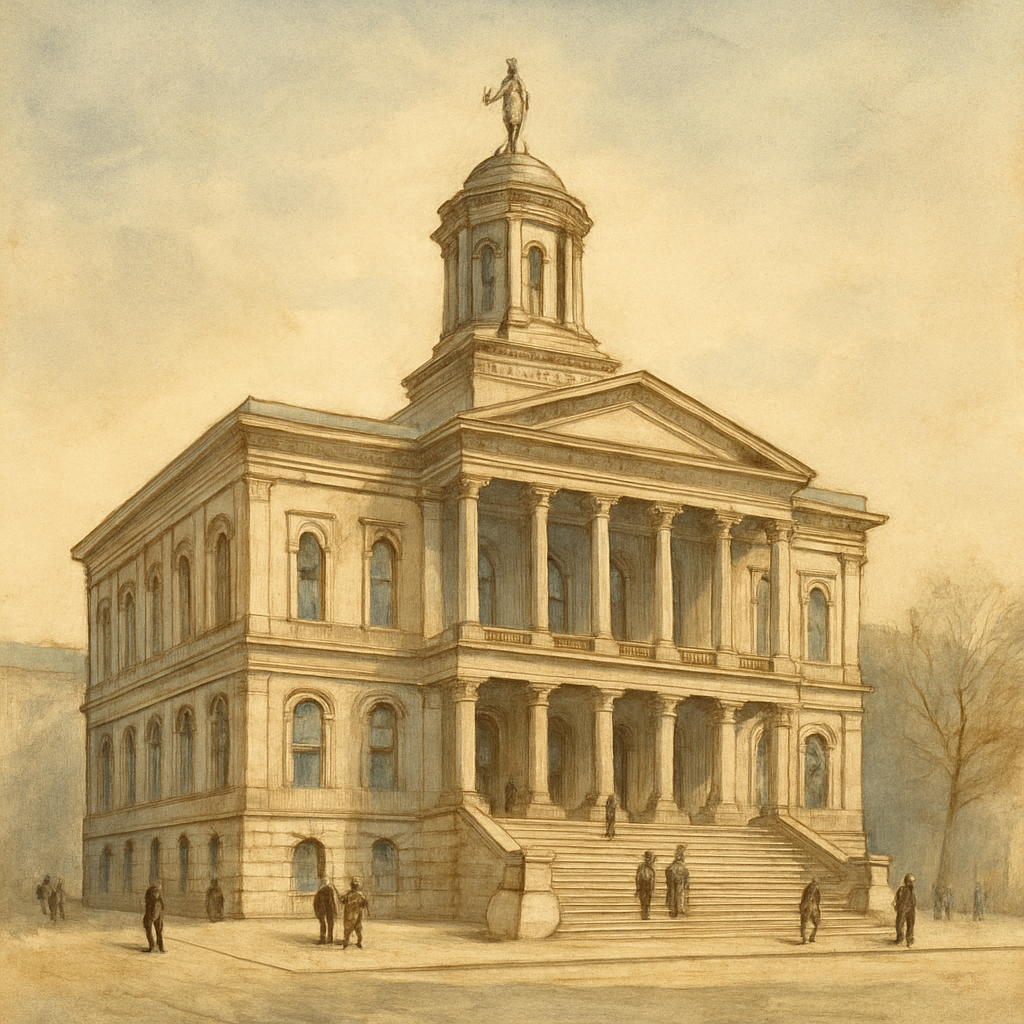
At 52 Chambers Street in Lower Manhattan's Civic Center stands an architectural masterpiece born from one of America's most brazen political scandals. The Tweed Courthouse represents both the ambition of the Gilded Age and the corruption that nearly consumed New York City.
In the 1860s, as New York City's population exploded, the county needed a new courthouse. What emerged at the corner of Chambers and Centre Streets would become far more than a functional building—it became a symbol of unchecked power. Boss William M. "Boss" Tweed, the dominant figure in Tammany Hall's political machine, oversaw its construction with a loose grip on the budget and an even looser interpretation of accountability.
A Building Built on Scandal
The original budget was modest: $250,000. But under Tweed's watch, costs spiraled. Workers padded invoices. Contractors overbilled. By the time the courthouse was completed in 1878, the final cost approached $14 million—an astronomical sum for the era. Contemporary accounts suggest kickbacks and graft at nearly every stage. The building became a monument not to civic duty, but to the machinery of machine politics that Tammany Hall had perfected.
Yet the corruption that paid for the Tweed Courthouse ultimately exposed it. Tweed's empire collapsed in the early 1870s under the weight of investigations and public outcry. He died in prison in 1878—the same year his courthouse officially opened.
Architecture That Endures
Despite its tainted origins, the building itself is undeniably striking. Designed in the Italianate style with soaring Romanesque Revival interiors, the courthouse features ornate marble staircases, intricate plasterwork, and a central rotunda that draws the eye upward. The craftsmanship inside contradicts the crude corruption outside—artisans were paid fairly and produced genuinely beautiful work.
The exterior walls use granite and limestone, materials chosen for permanence. The building has survived 150 years of New York's relentless change, perched in the Civic Center district alongside City Hall and the court buildings that would eventually replace it in function.
A Living Reminder
Today, the Tweed Courthouse operates as an office building. Visitors cannot freely tour the interior, though its presence on Chambers Street remains a visual anchor for anyone exploring Lower Manhattan's civic architecture. The New York County Supreme Court moved to a modern building decades ago, but this structure endures as a tangible reminder that even the grandest buildings can carry complicated histories.
The courthouse invites reflection: beauty and corruption occupied the same walls. Skilled labor and institutional theft happened in parallel. History preserved it not because it represents virtue, but because it documents a crucial—and cautionary—moment in New York's political evolution.
- lower-manhattan
- civic-history
- historic-architecture
- tammany-hall
- new-york-city
- gilded-age